

How to Select a Suitable Multi-Angle Butt Welding Machine for Insulated Thermal Pipes?
Insulated HDPE thermal pipes are widely applied in municipal heating, geothermal and industrial heat transmission projects. Pipeline systems contain a large number of 45° elbows, 90° tees, Y-shaped and cross joints, which rely on multi-angle butt welding machine for prefabrication. Most buyers lack systematic selection standards, leading to welding misalignment, crack and leakage due to improper equipment matching. This article provides a complete set of selection solutions combined with standard welding operation requirements and core equipment technical specifications.
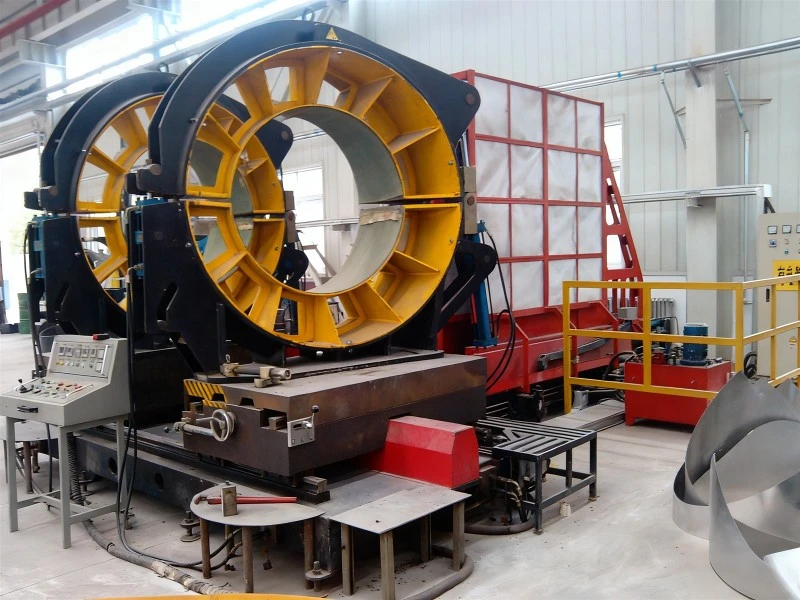
★1. Key Welding Operation Standards for Insulation Pipe (Selection Basis)
Before purchasing multi-angle butt welders, you must clarify the standardized welding process of thermal pipes, which is the core reference for equipment configuration matching. You can view full data in our technical document: insulated pipe welding parameter standard.
★1.1 Pre-welding Pipe & Surface Treatment Rules
Strip off outer PE protective layer and polyurethane foam insulation to reserve enough operation space, thoroughly remove foam debris, oil and dust on pipe ends. Only weld pipes with the same HDPE material and consistent SDR wall thickness; mixed materials are strictly prohibited. Use a special milling cutter to flatten pipe ends, and control fixture misalignment below 10% of pipe wall thickness. If the ambient temperature is lower than 5℃, build thermal insulation enclosure and raise heating plate temperature by 5-10℃. Stop all welding work on rainy, high humidity and dusty days to avoid layered cold welding.
★1.2 Temperature, Time & Pressure Control for Multi-Angle Fusion
Standard heating temperature for PE insulation pipe is 180℃±10℃. Check heating plate temperature regularly during continuous mass welding to avoid temperature drift. The PTFE coating on heating plate must stay intact without carbon accumulation. Multi-angle joints have larger fusion contact area, extend heat absorption time by 10% based on pipe wall thickness to form uniform welding bead. Complete pipe closing within 3 seconds after removing heating plate to prevent cold welding caused by rapid heat loss. Cooling time for angle welds is 50% longer than straight pipes. Do not unclamp or move pipes during full cooling period to avoid stress cracks. Adopt segmented pressure control: low pressure for heat absorption, stable high pressure for fusion molding.
★1.3 Post-weld Inspection & Anti-crack Protection
Check welding bead integrity without bubbles, gaps or cracks after full cooling. Conduct hydraulic leakage test for heating main pipes. Wrap polyurethane insulation layer only after weld completely solidified. Install support brackets at all multi-angle joint positions to buffer thermal expansion and contraction stress.
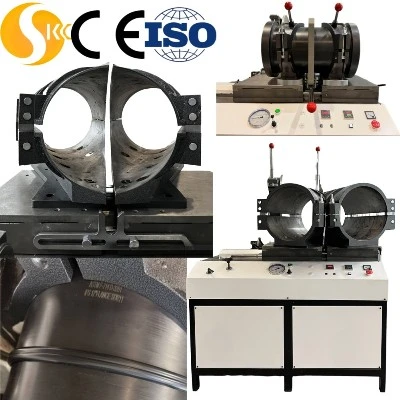
★2. Mandatory Technical Standards for Multi-Angle Welding Equipment
The fixture system is the core differentiated configuration of multi-angle welders, which directly determines welding precision and production efficiency. We will not expand on fixture classification in this article, and will launch a special blog to compare different fixture structures in detail next time. The universal standard requirements for frame and fixture are as follows:
★2.1 Multi-Angle Adjustable Heavy-Duty Frame & Fixture Basic Requirements
Qualified multi-angle butt welders are equipped with universal adjustable stations supporting 45°,60°,90°,Y and cross joint welding. Heavy linear guide rail bears heavy pipe weight to avoid offset during clamping. Lifting arm configuration is standard for DN630 and above large-caliber pipes to simplify pipe alignment and handling. Modular jaw clamps cover DN110-DN1200 full series insulated pipes.
★2.2 Constant Temperature Heating, Hydraulic & Milling System Specifications
Dual-channel independent digital temperature control with ±1℃ precision, equipped with overheat alarm and power-off protection function. Fully automatic hydraulic drive system with digital pressure gauge, automatic switching of heat absorption and welding pressure. Electric milling cutter with safety limit switch to prevent accidental startup. Dual independent timers record heat absorption and cooling time with sound reminder. The whole machine complies with DVS and ISO plastic pipe fusion welding standards, equipped with waterproof control panel suitable for outdoor construction. Optional PLC automatic model supports full welding temperature, pressure and time data recording to meet engineering acceptance standards.

★3. Scenario-Based Complete Selection Solution for Insulation Pipe Welding Machine
Match the equipment configuration according to your production environment, pipe diameter range and daily output demand:
Scenario 1: Outdoor municipal construction, DN110-DN315 small-caliber pipes, sporadic welding
Matching scheme: Lightweight multi-angle welder with compact frame, portable power supply and independent small milling unit, easy to transfer between construction sites.
Scenario 2: Fixed workshop prefabrication factory, DN350-DN1200 medium & large pipes, mass continuous production
Matching scheme: Heavy-duty multi-angle welding machine with lifting arm, full automatic hydraulic system and PLC data recording function, stable for long-time batch processing.
Scenario 3: Mixed production of small and large pipes, both factory prefabrication and occasional on-site construction
Matching scheme: Standard multi-angle main unit with detachable auxiliary fixture structure, flexible to switch production modes according to actual orders.
★4. Advantages of Our Multi-Angle Welder for Thermal Pipe Production
Our multi-angle fusion welder is customized for insulated pipe manufacturers and heating engineering contractors. The whole machine adopts intelligent temperature and pressure control system to reduce manual operation errors and effectively lower weld leakage rate. The lifting arm design greatly reduces labor intensity for large pipe loading and unloading, and has been widely recognized by global pipeline manufacturers.
★FAQ About Multi-Angle Welder Selection for Insulation Pipes
Q1: Can ordinary straight pipe butt welder weld Insulation pipe elbows and tees?
A: No. Ordinary welders lack adjustable multi-angle fixture, unable to guarantee concentricity of inclined joints, which will cause serious misalignment and long-term leakage risks.
Q2: What core parameters should be prioritized when purchasing multi-angle welding equipment?
A: Focus on adjustable angle range, applicable pipe diameter range, temperature control accuracy, hydraulic pressure stability, frame bearing capacity and whether it meets DVS & ISO industry standards.
If you need customized multi-angle butt welding equipment for insulated thermal pipe projects, welcome to Saemin official website to consult our professional technical team for tailored selection quotation and technical support.